
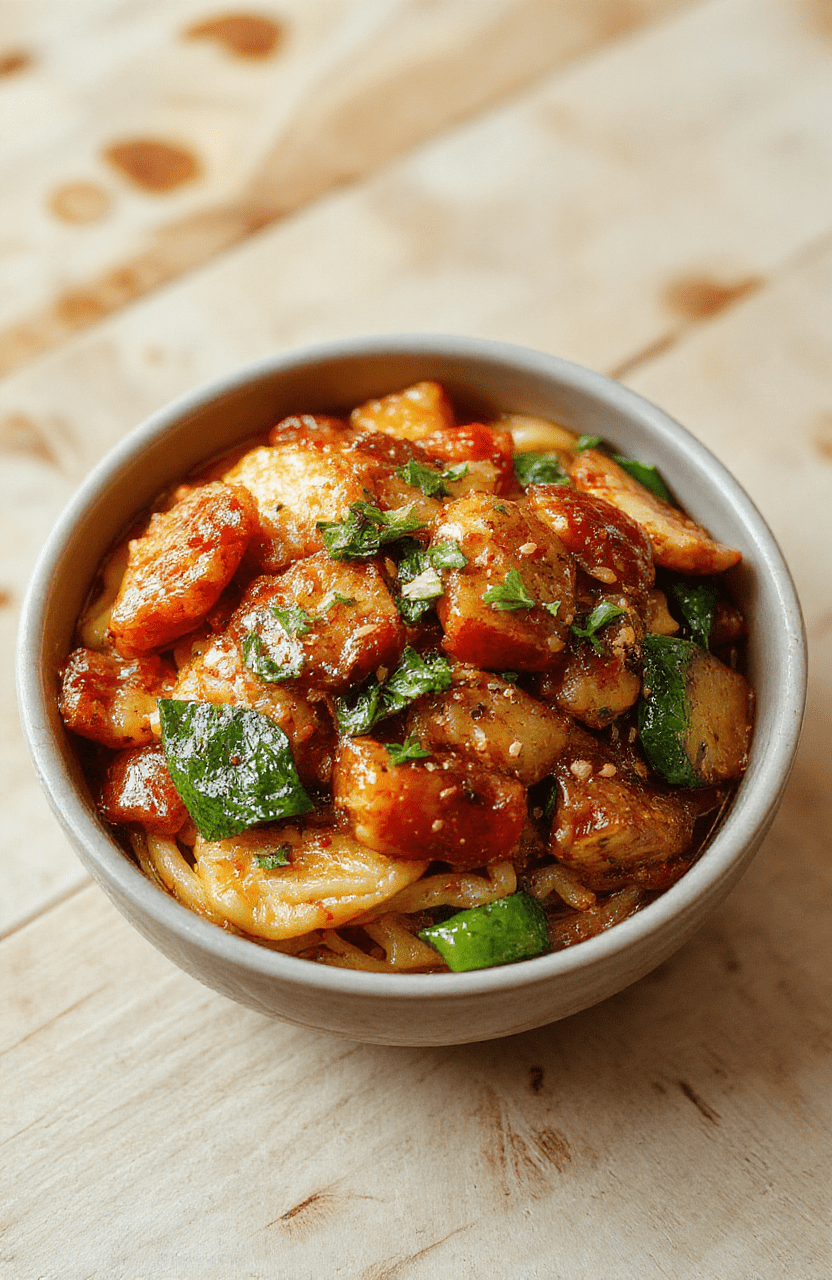
🔥 Spicy, Crunchy, & Irresistibly Flavorful: Authentic Kung Pao Noodles You’ll Crave Again & Again 🍜
1. Introduction
Craving a homemade kung pao noodles dish that delivers the same bold, complex heat of your favorite takeout—but with fresher ingredients and a guilt-free glow-up? You’re in luck. This recipe captures the essence of Sichuan cuisine with perfectly balanced ma la—the numbing spice of Sichuan peppercorns and fiery heat from dried chilies—complemented by tender chicken, crisp vegetables, and chewy rice noodles tossed in a glossy, umami-rich sauce.
What makes this version truly special is the use of hand-toasted peppercorns and a sauce that’s simmered—not dumped—so every bite sings with depth and harmony. Whether you’re planning a quick Chinese dinner on a weeknight or impressing guests with a restaurant-worthy spicy noodle recipe, this one will surprise you with how much better than takeout it truly is.
2. Why You’ll Love This Recipe
- ✅ Ready in under 30 minutes—faster than delivery and no minimum order required
- ✅ One-pan cooking method minimizes cleanup (hello, lazy cook’s dream!)
- ✅ Highly customizable—swap in tofu, shrimp, or extra veggies for dietary needs
- ✅ Better than takeout with control over sodium, oil, and spice level
- ✅ Freezer-friendly leftovers—make ahead for busy days
3. Ingredient Notes
Don’t skip the small details—they’re what elevate this from “okay” to “Where can I get more of this?!”
Sichuan peppercorns are non-negotiable for thatsignature tingle. Look for deep red, freshly ground or whole (toast & grind yourself for maximum aroma). Pre-ground often loses potency—worth the extra step.
Dried chili peppers: Use a mix like Guajillo (fruity) + driedThai bird chilies (fiery) for layered heat. Remove seeds for milder heat, keep in for serious spice.
Chicken: Boneless, skinless thighs stay juicier than breasts under high-heat stir-fry conditions. Cut into ¾-inch cubes for even cooking.
Rice noodles: Opt for wide rice noodles (not skinny “rice vermicelli”)—they’ve more surface area to cling to sauce and hold up to stir-frying without disintegrating.
Vegetables: Bell pepper + scallions are classic, but zucchini,Snap peas, or baby corn add crunch and color. Dry them well— excess moisture steams instead of sears.
Sauce base: Use light soy sauce (not regular) for cleaner saltiness, and Chinese black vinegar (or aged rice vinegar + splash of molasses) for that signature tangy depth.
4. Kitchen Tools You Need
You don’t need a commercial kitchen—but having the right tools makes this recipe effortlessly replicable:
- The T-fal 14-Piece Hard Anodized Nonstick Cookware Set includes the perfect deep skillet for stir-frying without sticking. Its even heat distribution prevents scorching—critical for that beautiful char.
- A Compact 6-in-1 Digital Air Fryer by Amazon Basics comes in handy for quickly crisping peanuts or tofu ahead of time (no oil splatter!).
- Philips 7000 Series Pasta Maker with 8 Shaping Discs lets you craft fresh rice noodles from scratch—yes, really—and control texture for authentic chew.
- For meal-preppers: the JoyJolt Airtight Glass Food Storage Set keeps leftovers fresh for up to 4 days—no plastic, no odors, just clean storage.
- Fullstar Ultimate Veggie Prep Master saves minutes slicing bell peppers and scallions uniformly—perfect for consistent cooking.
5. How to Make Savory Kung Pao Noodles
Serves 4 | Total time: 25 minutes
Phase 1: Prep & Toast (5 mins)
First, don’t skip the dry toast. In a small skillet over medium-low heat, toast 1 tbsp Sichuan peppercorns for 2–3 minutes until fragrant and slightly darker. Let cool, then lightly crush with a mortar & pestle (or spice grinder). This unlocks the floral-citrus notes that define real kung pao.
In a bowl, whisk sauce ingredients: 3 tbsp light soy sauce, 2 tbsp Chinese black vinegar, 1 tbsp Shaoxing wine, 1 tbsp water, 1 tsp cornstarch, 1 tsp sugar, and ½ tsp sesame oil. Set aside.
Marinate 12 oz chicken cubes with 1 tsp soy sauce, ½ tsp Shaoxing wine, and 1 tsp cornstarch for 10 minutes (key for tender bites).
Phase 2: Stir-Fry (10 mins)
Heat 2 tbsp peanut oil in your largest skillet or wok over high heat until shimmering—but not smoking. Add chicken and sear 2–3 minutes, stirring constantly, until golden and just cooked through. Remove and set aside.
Same pan, same high heat. Add 2 tbsp oil, then 6–8 dried chilies and 2 chopped green onions (whites only). Stir 15 seconds until fragrant, not burnt—this is your chili-oil infusion.
Add bell peppers (1 red, 1 yellow, sliced) and stir-fry 2 minutes until crisp-tender. Return chicken to the pan.
Phase 3: Sauce & Toss (5 mins)
Give your sauce a quick stir (cornstarch settles quickly), then pour into the pan. It will thicken in seconds—stir until glossy and coating everything (about 30 seconds).
Add noodles (pre-cooked, rinsed & drained): 8 oz wide rice noodles. Toss vigorously for 1–2 minutes until noodles are heated through and absorb sauce.
Off heat, fold in toasted Sichuan peppercorns, toasted peanuts (½ cup), and green onion tops. Finish with a drizzle of chili oil if you want extra layers.
6. Expert Tips for Success
- 🔥 Heat is non-negotiable: Cold pan = steamed, soggy noodles. Preheat 2 minutes before oil.
- 🧂 Sauce order matters: Always dissolve cornstarch in cold liquid first—otherwise, you’ll get gritty lumps.
- 🥜 Toasting peanuts matters: Spread on a baking sheet, 350°F for 6–7 minutes, cooled slightly—raw peanuts taste dusty.
- 湿润 Noodle prep hack: Cook noodles 1 minute *less* than package directions, then rinse in cold water. This prevents mushiness during stir-fry.
- 🌿 Herb finish: Add chopped cilantro or Thai basil at the end for a bright, herbal lift that balances heat.
7. Variations & Substitutions
- Vegan? Swap chicken for extra-firm tofu (pressed & cubed) or jackfruit. Use tamari instead of soy sauce.
- No alcohol? Replace Shaoxing wine with 1 tbsp dry sherry or 1 tsp brewed rice wine + ½ tsp apple cider vinegar.
- Spice level? Control it: Use 1 chili for mild, 4 for medium, 8+ for “mouth-numbing” heat. Remove seeds for less burn.
- Low-sodium? Use reduced-sodium soy sauce and add 1 tbsp mushroom powder for umami depth.
- Prefer wheat? Substitute egg noodles or lo mein noodles—just cook al dente.
8. Storage & Reheating
✅ Fridge: Store in airtight containers up to 3 days. Sauce thickens on standing—thin with 1 tsp water before reheating.
✅ Reheat: Stovetop is best: Add a splash of water or broth,盖 with lid, 2–3 minutes on medium-low. Avoid microwave—it overcooks noodles and rubberizes chicken.
✅ Freezer? Freeze *without* noodles or peanuts. Thaw overnight, then toss in fresh, cooked noodles + toasted peanuts when reheating.
9. FAQ
Q: Can I use spaghetti or spaghetti squash?
A: Spaghetti lacks the clean bite of rice noodles. Spaghetti squash is too delicate—it breaks apart. Stick to rice noodles for authenticity.
Q: Why is my kung pao bland?
A> Most likely, your Sichuan peppercorns are stale or pre-ground. Freshly toast & crush them—that’s where the signature “buzz” lives. Also, check soy sauce age: old soy sauce loses salt potency.
Q: How do I prevent sticky noodles?
A> Cook, rinse *thoroughly* with cold water, then toss with 1 tsp sesame oil before stir-frying. Never skip the rinse—it stops carryover cooking and washes away surface starch.
Q: What if I don’t have Chinese black vinegar?
A> Mix 1½ tbsp apple cider vinegar + ½ tsp dark brown sugar. Not perfect, but adds the needed tang-sweet balance.
10. Conclusion
This isn’t just a recipe—it’s your new goto for Chinese dinner that feels impressive, healthy, and deeply satisfying. With its bold heat, aromatics, and that addictive ma la tingle, you’ll no longer reach for the phone to order takeout.Pair it with a crisp Riesling or our Super Bowl Snack Platter for game-day glory.
And if you loved this savory twist, explore our Sweet & Spicy Honey Pepper Chicken or our Game-Day Buffalo Sliders next. For dessert? You simply *must* try the Ultimate Moist Chocolate Banana Bread—it’s legendary.
Now go toast those peppercorns—and let the satisfying sizzle begin. 👇 Drop a comment if you make it—I’d love to hear how your spice level turned out!
Print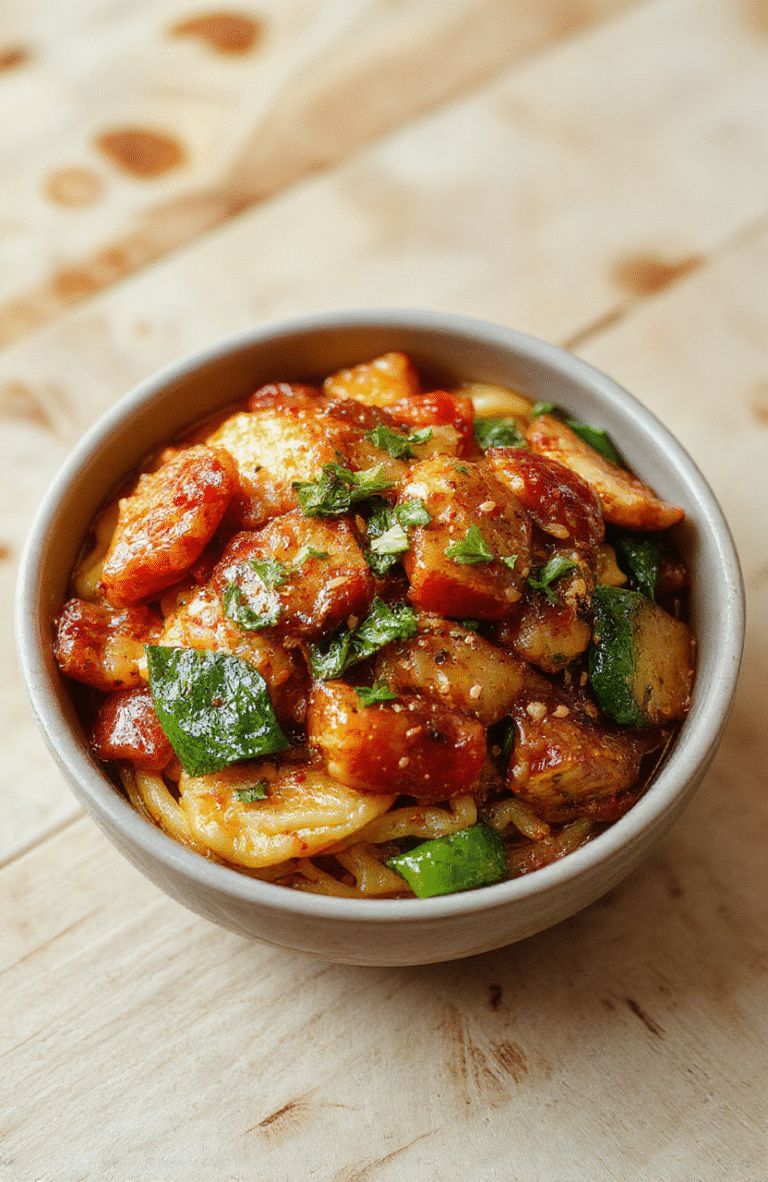
Savory Kung Pao Noodles
A quick, flavorful, and customizable Sichuan-inspired noodle dish that’s quicker than delivery and packed with authentic kitchen-smoke flavor.
- Total Time: 25 minutes
- Yield: 4 servings 1x
Ingredients
- 8 oz rice noodles (or lo mein noodles)
- 1 lb boneless, skinless chicken breast, cubed
- 2 tbsp soy sauce (divided)
- 1 tbsp Shaoxing wine or dry sherry
- 1 tsp cornstarch
- 2 tbsp peanut oil (or avocado oil)
- 3 cloves garlic, minced
- 1 tbsp fresh ginger, minced
- 3–4 dried red chilies, sliced
- 1 tbsp Sichuan peppercorns, lightly crushed
- 1 red bell pepper, sliced
- 1 green bell pepper, sliced
- 4 green onions, chopped
- 1/4 cup roasted peanuts
- For sauce: 2 tbsp soy sauce, 1 tbsp Chinkiang vinegar (or balsamic), 1 tbsp Shaoxing wine, 1 tbsp honey, 1 tsp sesame oil, 1 tsp cornstarch
Instructions
- Cook noodles according to package instructions; drain and toss with a drizzle of oil to prevent sticking.
- Marinate chicken with 1 tbsp soy sauce, 1 tbsp Shaoxing wine, and 1 tsp cornstarch for 10 minutes.
- Whisk all sauce ingredients in a small bowl and set aside.
- Heat 1 tbsp oil in a large wok or skillet over high heat. Add chicken and stir-fry until golden (3–4 mins). Remove and set aside.
- Add remaining oil, then sauté garlic, ginger, chilies, and Sichuan peppercorns for 30 seconds until fragrant.
- Add bell peppers and stir-fry 2 minutes until crisp-tender.
- Return chicken to pan. Pour sauce over and stir to coat. Cook 1–2 mins until glossy and thickened.
- Toss in noodles and green onions. Toss 1–2 mins until evenly coated and hot.
- Top with peanuts and extra green onions. Serve immediately.
Notes
- For authentic numbing heat, toast and crush Sichuan peppercorns just before using.
- Gluten-free? Use tamari instead of soy sauce and rice noodles.
- Vegetarian? Swap chicken for firm tofu or seitan.
- Meal prep-friendly: Store noodles and sauce separately to avoid sogginess.
- Prep Time: 15 minutes
- Cook Time: 10 minutes
- Method: Stir-fry
- Cuisine: Chinese
- Diet: None specified
Nutrition
- Serving Size: 1 bowl (approx. 3 cups)
- Calories: 480 Kcal
- Sugar: 9g
- Sodium: 790mg
- Fat: 14g
- Saturated Fat: 3g
- Unsaturated Fat: 9g
- Trans Fat: 0g
- Carbohydrates: 62g
- Fiber: 4g
- Protein: 28g
- Cholesterol: 70mg